
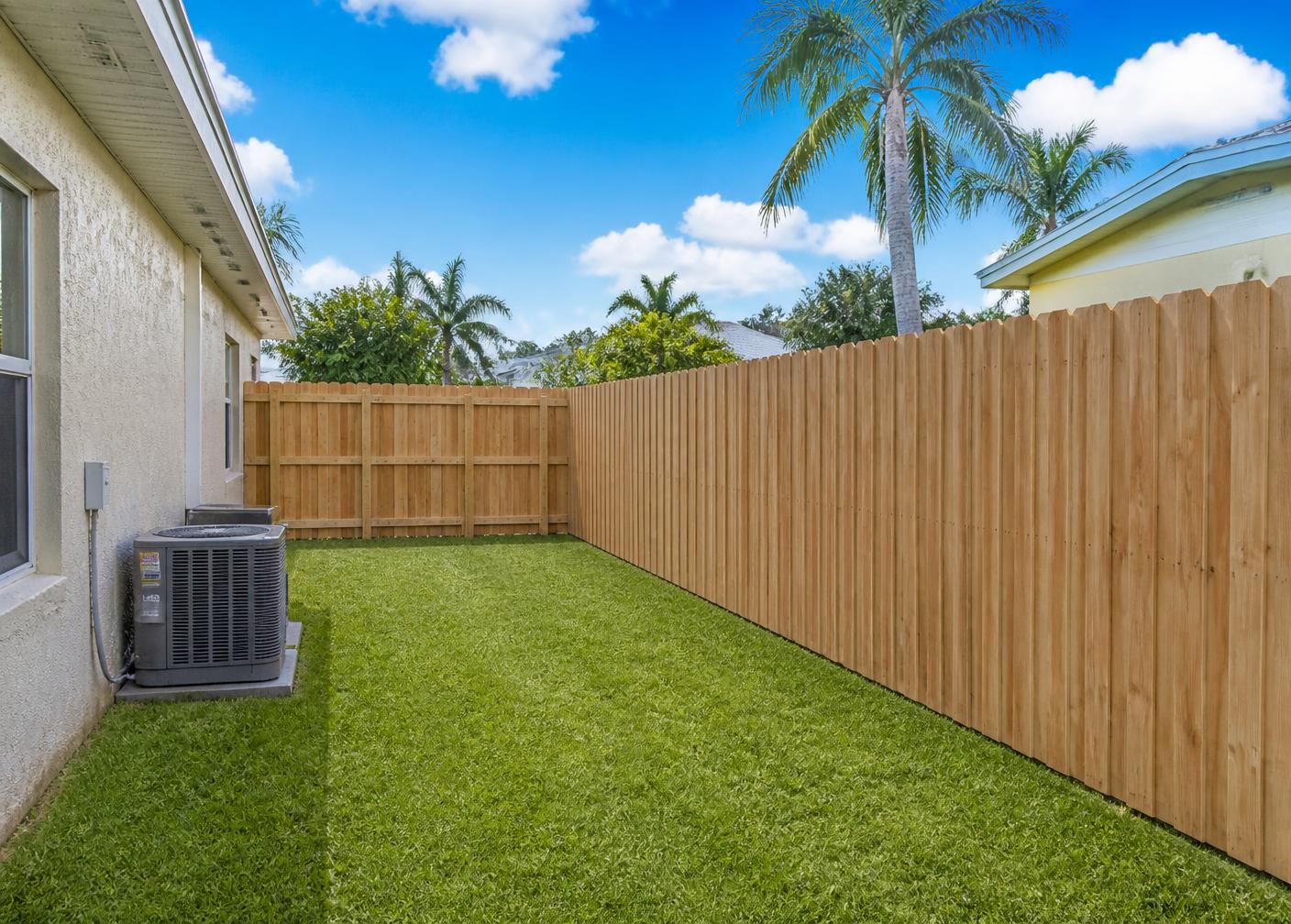
After the Storms: Whether a Fence Needs Repair or Replacement
Storm season is winding down. Here is how to tell whether a Florida fence needs a section repair or full replacement, starting with the posts, not panels.
Whether a storm-damaged fence needs repair or replacement almost always comes down to the posts. If the posts are still solid and upright, a section repair usually makes sense; if posts are moving, leaning or broken at ground level across much of the run, replacement is usually the better use of your money.
That is the short answer. The rest of this guide walks through how to check your own fence safely, what the damage patterns tell you, and how to prepare for a conversation with a contractor or an insurance adjuster once the season winds down.
Why this is the right time to look
Atlantic hurricane season officially runs until 30 November, and in central Florida the late-season fronts and afternoon storms keep testing fences right up to the end. By October, many homeowners in Ocala, Belleview and Summerfield are looking at a fence that has taken several months of wind, soaked ground and falling limbs.
Damage from one storm is easy to spot. Damage that built up over a whole season is harder. A post that loosened in August may look fine from the patio but rock freely when you push on it. A slow walk around the whole perimeter now gives you a clear picture before the dry season, which is generally easier building weather.
Safety before inspection
Before touching anything, look for downed power lines, limbs hung up in trees, and sections that are leaning under their own weight. Do not push on a fence that is near a line or is already partly down. Keep children and pets away from broken wood, exposed screws and bent metal.
If the fence surrounds a pool, treat any gap as urgent. A missing panel or a gate that no longer latches means the barrier is not doing its job. Put up a temporary barrier or keep the area supervised until a repair is made.
Start with the posts
Stand beside each post and push the fence firmly at about shoulder height. Watch where the post meets the ground. A sound post barely moves; any flex should come from the rails or panel, not the base. A failing post rocks at the soil line, opens a crescent-shaped gap in the dirt, or drags the section with it.
On wood posts, check the area just above and just below grade. That is where water sits and where decay starts. Soft fibers, deep cracks, or wood that crumbles when pressed are signs the post is finished regardless of how the boards look.
With vinyl, movement can come from the post or from a rail that has popped out of its route. Follow the motion to find where it starts. Aluminum and chain link posts should be checked for bends at the base and for footings that have heaved or shifted in wet sand.
Reading the damage pattern
Isolated damage usually means a repair. A limb that crushed one panel, a gate hit by blowing debris, or a handful of pickets knocked loose can often be fixed while the rest of the fence carries on as before.
Widespread damage tells a different story. If many posts lean the same way, the problem is likely depth, footing, drainage or age across the whole line, and storms simply exposed it. Straightening panels without correcting the posts only sets up the same failure next season.
Pay attention to where the fence failed. Long, solid privacy runs facing open ground take more wind than sheltered sections. Corners and gate posts carry extra load. If the weak points line up with those positions, a rebuild may need heavier posts or different spacing, not just replacement of what broke.
Matching old and new material
Matching is often the deciding factor. Weathered wood has a color and texture that new boards will not share for some time. Stain can help blend a repair but cannot recreate natural aging exactly.
Vinyl and aluminum product lines change too. A discontinued panel pattern, cap style or color can make an exact section match difficult. The repair may be structurally sound but visually obvious. Some homeowners are fine with that, especially on a back property line. Others, particularly in HOA communities, will need an exact match or approval for a change.
Thinking about cost the right way
We will not quote numbers in an article, because the real figure depends on your fence, your property and the extent of the damage. What drives the decision is the full picture: how many sections are affected, how many posts are failing, how hard the material is to match, and whether this is the first repair or the fourth.
One repair on a healthy fence is sensible. Repeated repairs on a fence where the posts are failing one by one tend to add up while leaving you with an old fence. A written estimate should lay out both options side by side so you can compare them honestly. Request a free estimate and ask for exactly that comparison.
Documenting for insurance
If you plan to file a claim, photograph everything before cleanup. Take wide shots of the whole fence line, then close-ups of broken posts, fallen limbs, crushed panels and any debris. Include the undamaged sections too, because they help show the condition of the fence before the storm.
Insurers typically want to separate sudden storm damage from wear and decay that was already present. Clear photos, the date of the storm, and a written contractor assessment make that easier. Coverage varies from policy to policy, so read your own policy or speak with your agent rather than relying on general advice.
Temporary fixes that make sense
While you wait for a repair, some short-term measures help. Prop a leaning section with a brace rather than letting it pull neighboring posts over. Remove loose boards or panels that could blow around in the next storm. Close gaps with temporary fencing if you have pets, livestock or a pool.
Avoid permanent-looking patches that hide the real problem. Screwing a new board across a broken post, for example, may hold for a while but makes the eventual repair more complicated.
When to call for a professional look
Call for an inspection when more than one post moves, when a gate no longer swings or latches, when a pool barrier is compromised, or when you are unsure whether damage is structural. A contractor can walk the full line, test every post, and explain what can be saved.
We work across Ocala, Belleview, Summerfield, Dunnellon and the surrounding area. If your fence came through the season looking tired, request a free estimate and we will tell you plainly whether a repair or a replacement is the smarter move.
Thinking about a new fence?
Vinyl, wood, aluminum, chain link and farm fencing across Ocala and Marion County — free written estimates and a 5-year workmanship guarantee.
LIMITED-TIME OFFER: FREE GATE WITH YOUR NEW FENCE INSTALL