
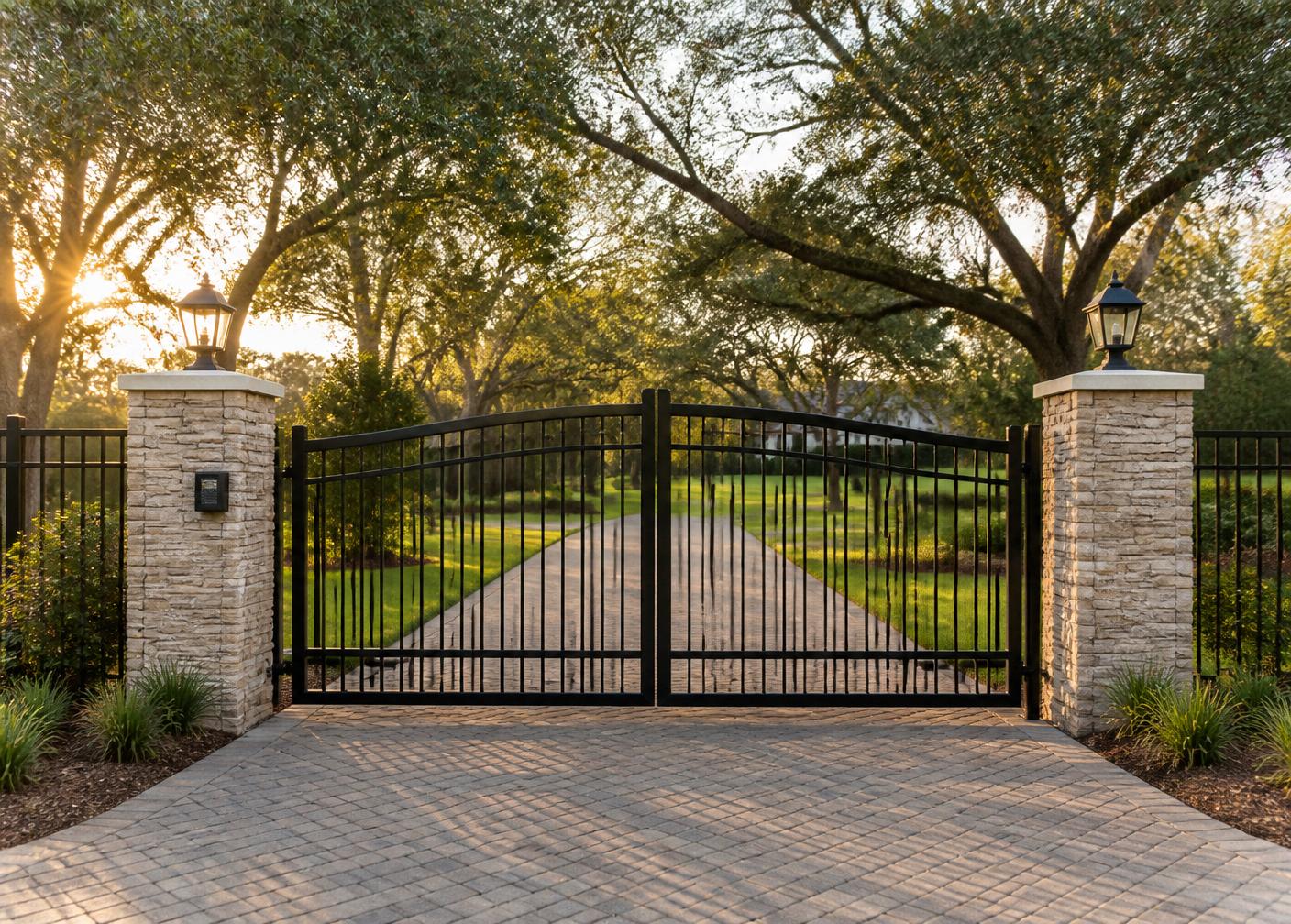
Driveway gates and automation: what to know before you buy
Swing vs. slide, opener types, power at the road, safety loops and the hardware that decides whether it lasts.
A driveway gate is the most mechanically demanding thing on a property line, and the failures are always in the same places.
Swing or slide is decided by geometry. Double-swing gates work well up to roughly sixteen feet total and need level, clear ground through the swing arc. Slopes, tight setbacks or wider openings usually mean a sliding or cantilever gate.
Posts carry everything. A gate post is not a line post — it is bigger, set deeper, and often set in a substantially larger footing. This is where cheap gate installs fail within a year.
The gate frame itself needs a welded or diagonally braced structure. Any gate over about six feet wide will sag without one, and once it sags the latch stops meeting and the opener starts straining.
For automation, decide power first. If the gate is far from the meter, a solar opener with a battery bank is usually cheaper and simpler than trenching a run to the road.
Then decide access: keypad, remotes, intercom, phone-based entry, or a combination. Add a safety loop or photo eye so the gate never closes on a vehicle or a person.
Finally, maintenance. Hinges get greased, batteries get replaced, and the opener wants an annual look. We install openers with serviceable, widely available parts rather than proprietary systems nobody local can fix.
We build custom entry and driveway gates across Ocala, Dunnellon, Reddick, Mount Dora and the surrounding counties, including column integration and mixed-material designs.
Thinking about a new fence?
Vinyl, wood, aluminum, chain link and farm fencing across Ocala and Marion County — free written estimates and a 5-year workmanship guarantee.
LIMITED-TIME OFFER: FREE GATE WITH YOUR NEW FENCE INSTALL