
Fence Permits and HOA Rules in Ocala and Marion County
Height limits, setbacks, which side faces out, and why rules differ between the city, the county and your HOA.
A fence can be well built and still be in the wrong place, at the wrong height or in a style a neighborhood will not approve. The important first step is knowing which set of rules applies to your property, because there is no single fence rule for every Ocala-area address.
City, county and HOA rules are different
A property inside the City of Ocala may follow city requirements. A property with an Ocala mailing address can sit in unincorporated Marion County and follow county requirements instead. A homeowners association can add another layer covering material, color, height, style and placement.
Approval from one does not automatically satisfy the others. An HOA letter does not replace a required permit, and a permitted fence can still violate private neighborhood restrictions. Confirm the jurisdiction and the association before ordering material.
Front yards and backyards are treated differently
Rules commonly allow less fence height near the front of a property than behind the home. The reason is visibility and the open character of streets, not a judgment about which material looks best. A side yard may change classification depending on where it sits relative to the house and road.
Corner lots need extra attention because they face two streets. A location that feels like a side yard to the homeowner may function like a front or street-side yard under local rules. Ask how each segment is classified rather than assuming one height applies around the entire lot.
Setbacks and the property line
A setback controls how far a structure must sit from a boundary, road, easement or other feature. Fence placement can also be affected by drainage, utilities and access easements. The old fence, mowing edge or landscaping line is not proof of ownership.
A current survey shows the parcel boundaries and is the right starting point. If pins are missing or the line is disputed, resolve that before installation. Moving marks or guessing from a neighboring structure is not a substitute for professional boundary information.
Why the finished side faces out
Many communities expect the finished face of a fence to face the neighboring property or street, leaving rails and structural members toward the owner. The convention protects the appearance of the public and neighboring side and can make the outside harder to climb.
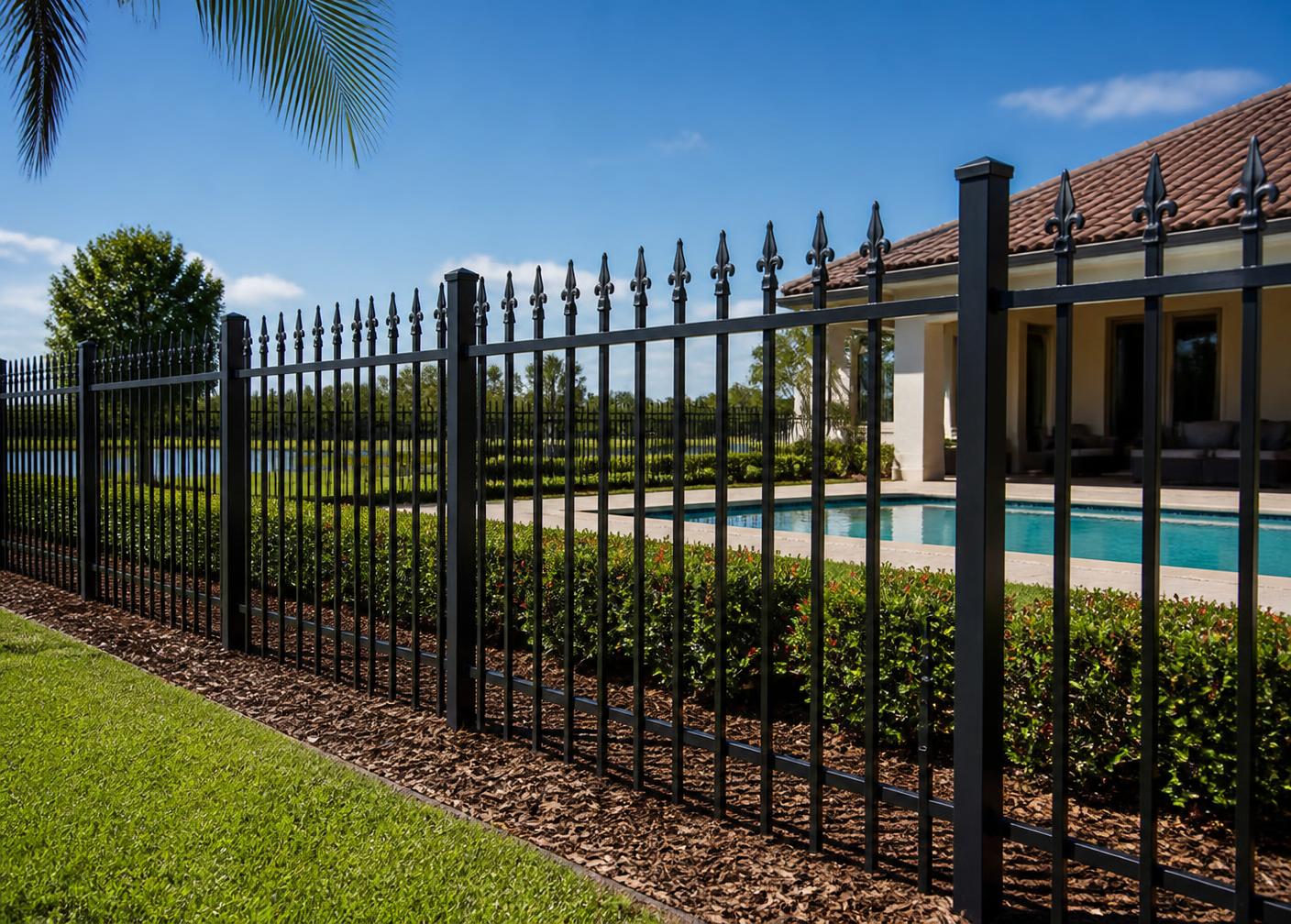
Some styles look finished from both directions. Shadowbox, certain vinyl systems and ornamental aluminum can avoid the visual difference altogether. Even then, gates and posts still need to follow the approved drawing.
Corner lots and sight triangles
Drivers need a clear view where streets, alleys and driveways meet. Local rules may preserve an open sight area at a corner, limiting fence height or requiring an open style there. Shrubs and other obstructions can be part of the same review.
Do not assume an existing fence proves the location is allowed. It may predate current ownership, have been installed without approval or no longer match the way an intersection is used. Confirm the current requirement for the specific parcel.
What if a fence crosses the line?
A fence built onto a neighbor's property can lead to a dispute, removal and a second installation. It can also create problems when either property is sold. Agreement about where everyone believes the line sits does not change the surveyed boundary.
Before work begins, ask: which jurisdiction controls this address, is a permit required, does an HOA approve the design, how is each yard segment classified, are there easements or sight restrictions, and is the survey clear? Those questions remain useful even when local requirements change.
Thinking about a new fence?
Vinyl, wood, aluminum, chain link and farm fencing across Ocala and Marion County — free written estimates and a 5-year workmanship guarantee.
LIMITED-TIME OFFER: FREE GATE WITH YOUR NEW FENCE INSTALL