Farm and Ranch Fencing: Field Fence, Barbed Wire and Gates That Swing True
Field fence, barbed wire or board? How to match farm fencing to your animals, brace long runs in sandy ground, and hang gates that keep swinging true.
The right farm fence depends on the animals it holds: field fence suits cattle, goats and general boundaries, barbed wire suits cattle on long perimeter runs, and horses generally need something safer and more visible than barbed wire. Whatever you choose, the corners, braces and gate posts decide whether it stays tight and whether your gates keep swinging true.
This guide is for ranch owners and acreage homeowners around Ocala, Summerfield, Dunnellon and Citrus Springs. It covers the main fence types, where each belongs, and the construction details that matter most on long runs in sandy ground.
Start with the animals
A fence is a barrier for a specific animal. Cattle push. Goats climb and squeeze. Horses run, spook and can injure themselves on wire they cannot see. Dogs dig. The same fence rarely suits all of them.
List what the fence must hold now and what it might hold later. A pasture built for cattle today may need to hold horses in a few years. Planning for that now can save rebuilding later.
Field fence
Field fence, sometimes called woven wire, is a mesh of horizontal and vertical wires. Spacing is usually tighter near the bottom to stop smaller animals. It works well for cattle, sheep, goats and general property boundaries.
For horses, no-climb mesh with small openings is a better choice, because a hoof cannot go through it. It is often topped with a board or a visible rail so horses can see the line.
Barbed wire
Barbed wire is common for cattle on long perimeter runs because it covers distance efficiently. It is not recommended for horses; injuries from barbed wire can be serious. Where cattle and horses share property, keep barbed wire to cattle-only areas.
Barbed wire must be kept tight. Loose strands are easier for animals to push through and more likely to cause entanglement.
Board and rail fence
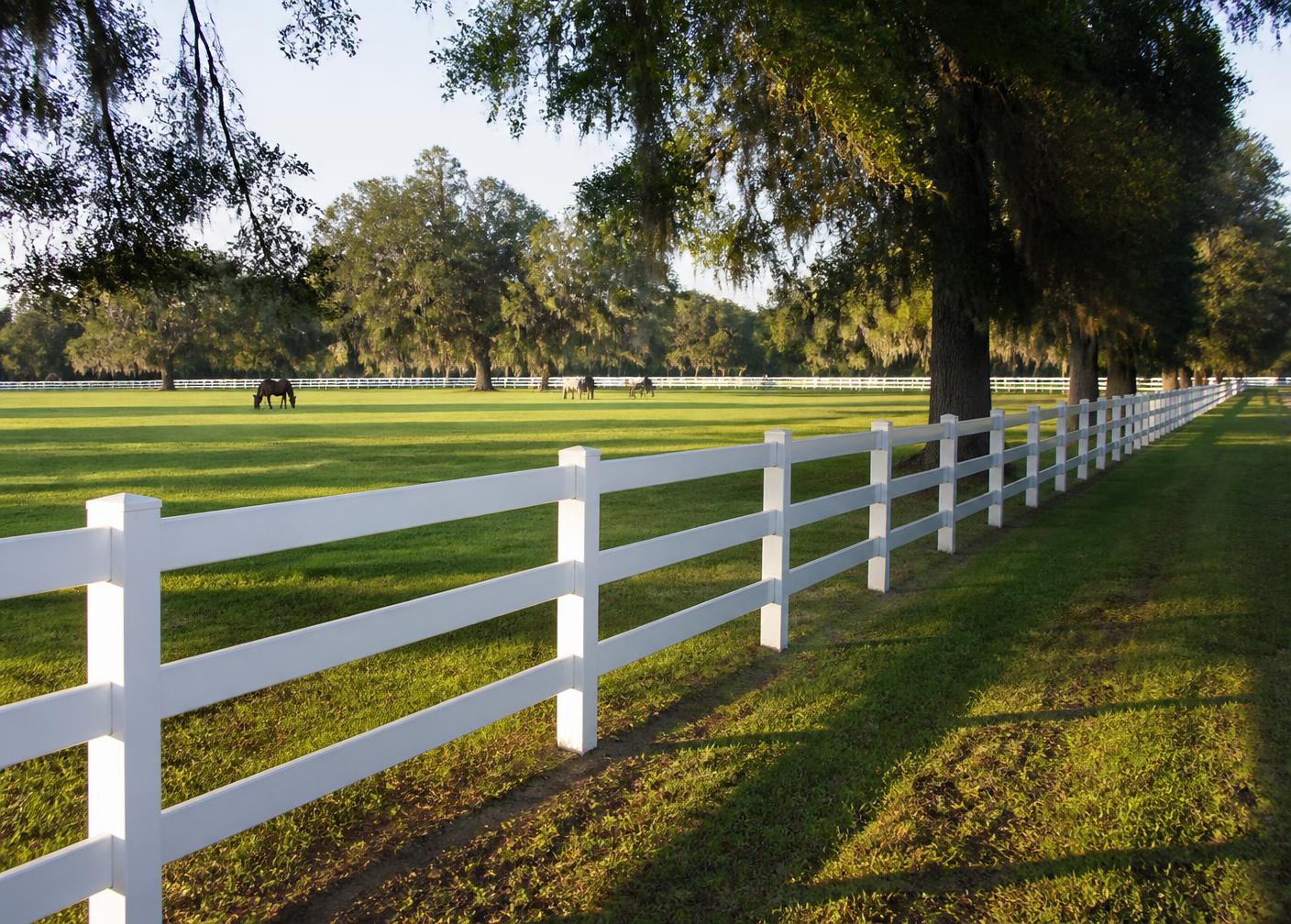
Three-board and four-board fences are part of the look of Marion County horse country. They are highly visible, which helps horses, and suit front pastures and road frontage. They require more maintenance than wire, and horses may chew wood. Many owners combine board fence with no-climb wire on the inside.
Corners and bracing
Wire fences are held tight by tension, and that tension pulls on the corners and ends. If the corner moves, the whole run goes slack. That is why corner assemblies, often called H-braces, are the most important part of a wire fence.
In sandy soil, a corner post has less grip, so bracing and depth matter even more. Long runs may also need in-line brace assemblies to hold tension over distance and across changes in grade.
We do not state brace spacing or depth figures in articles because they depend on the fence type, run length, soil and terrain. Ask any contractor to explain how they brace your corners and long runs.
Gates that swing true
A sagging farm gate is one of the most common frustrations on any property. The gate leaf itself is rarely the problem. Usually the hinge post has leaned, shifted or was never set for the load.
A gate post must carry the gate's weight hanging off one side, plus the extra force when someone leans on it, a horse rubs against it, or wind catches it. That means a heavier post, a deeper setting and often a brace. The latch post matters too, because the gate has to close into something that stays put.
Hang the gate level with the right hinge spacing, and check the swing path. Make sure it clears the ground across the full arc, which matters on sloped ground, and does not swing into a traffic area.
Gate placement and size
Think about the equipment that needs to pass: tractors, trailers, mowers, hay deliveries and trucks. A gate that is too narrow for your equipment forces tight turns and leads to damage. Place gates where traffic naturally flows, and consider double gates for wide openings.
Plan gates between pastures so you can move animals without taking them through a barn or yard. Rotational grazing works best when gates line up with how you actually move stock.
Long runs and terrain
Long fence lines cross dips, rises and wet spots. Wire should follow the ground so gaps do not open at the bottom. Low areas that hold water may need extra attention to post choice and drainage. Wooded lines may need clearing before layout.
Maintenance
Walk your fence regularly and after storms. Check corners for movement, retighten wire, clear fallen limbs, and look at gate posts. Early repair of a leaning corner prevents a whole run from going slack.
What drives cost
We do not quote prices in articles. Farm fence cost depends on the type of fence, total length, number of corners and braces, gates, terrain, clearing and access. Long runs can be efficient per section, but corners, gates and rough ground add work. Request a free estimate and we will walk the property and price it based on your animals and layout.
Getting started
Before you call, sketch your property with the pastures, gates and animals you plan to keep. That makes the first conversation faster. We build farm and ranch fence across Ocala, Summerfield, Dunnellon, Citrus Springs and the surrounding area. Request a free estimate and we will help you plan a fence that holds your stock and gates that keep swinging true.
Thinking about a new fence?
Vinyl, wood, aluminum, chain link and farm fencing across Ocala and Marion County — free written estimates and a 5-year workmanship guarantee.
LIMITED-TIME OFFER: FREE GATE WITH YOUR NEW FENCE INSTALL