HOA Fence Approval in The Villages and Marion County: What to Sort First
Before an HOA fence application, sort the survey, your community's written rules, style and color, and a clear site drawing: what boards ask for first.
The first things to sort before an HOA fence application are your community's written fence rules, an accurate survey, and a clear drawing showing exactly where the fence will go. With those three in hand, most applications in The Villages and Marion County communities move far more smoothly than when homeowners start by picking a style.
This article is written for homeowners and for HOA board members who review these requests. It explains what to gather, in what order, and where applications most often get held up.
Every community is different
There is no single set of HOA fence rules in central Florida. The Villages, the 55-plus communities in Summerfield, deed-restricted subdivisions in Ocala and neighborhoods in Lady Lake each set their own architectural standards. Some allow fences only in certain yard areas. Some specify one style or color. Some do not allow certain materials at all.
HOA rules also sit on top of city or county requirements, not in place of them. Approval from your association does not replace any permit the local government requires, and a permit does not mean the HOA has approved the design. You usually need both.
Step one: get the written rules
Ask the association or management company for the current architectural guidelines, not a neighbor's memory of them. Rules are revised over time, and what was approved on the next street a few years ago may not be allowed today.
Look for sections covering fence height, permitted materials, colors, where fences may be placed, required setbacks from sidewalks or lot lines, gate rules, and whether landscaping is required in front of the fence. Note any rules about which side of the fence must face out.
Step two: confirm the property line
An HOA drawing is only as good as the survey behind it. Find your most recent survey, usually part of your closing paperwork. If you cannot find it, or the lot has changed since, ask about a new one before submitting.
Boards reviewing applications appreciate a site plan drawn on the survey, because it shows the fence in relation to the house, the lot lines, easements and any shared areas. It also protects you. A fence built over a line or inside a drainage or utility easement can create problems later that no approval letter will fix.
Step three: choose a compliant design
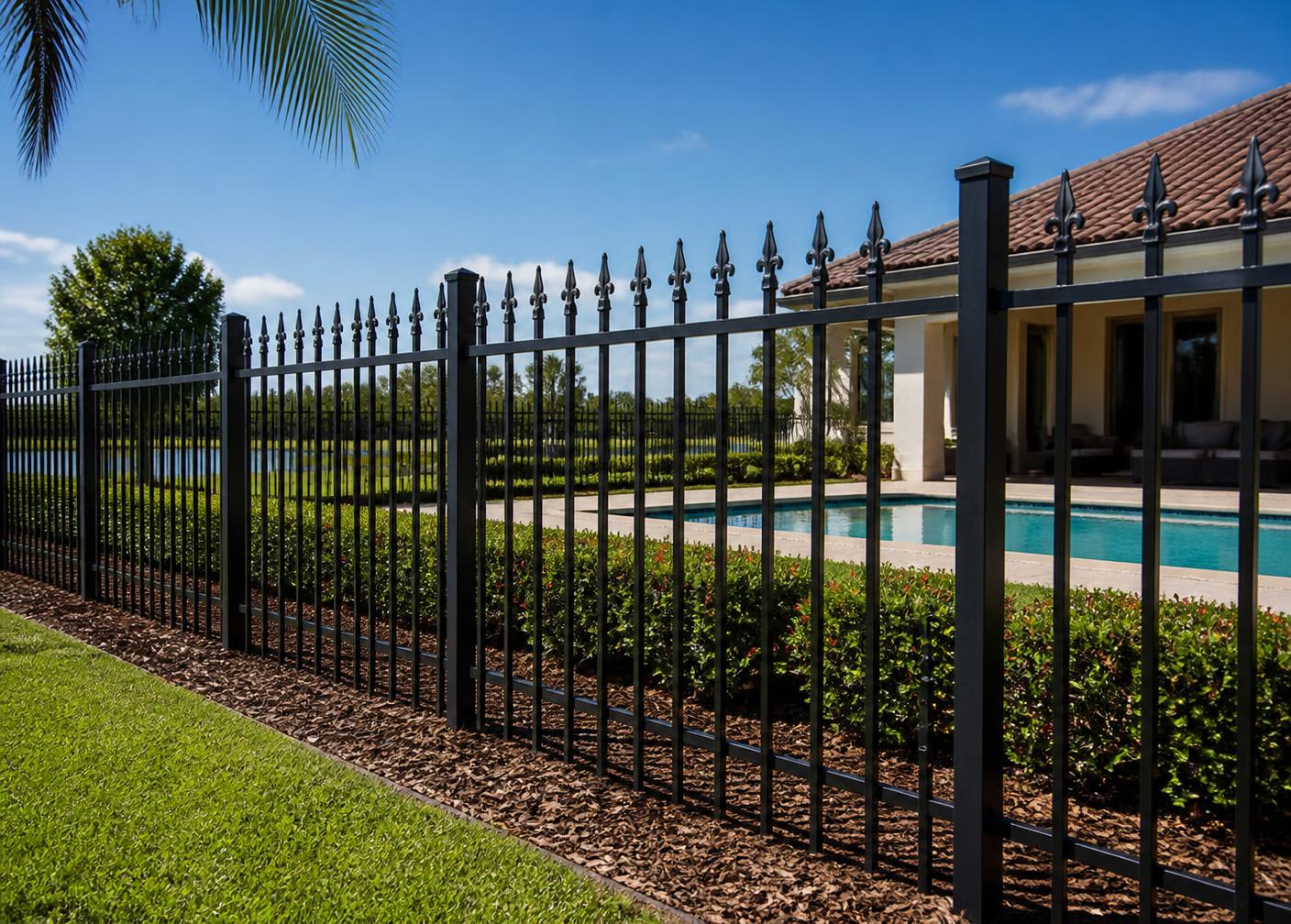
Once you know the rules and the line, choose a design that fits both. In many Villages and Summerfield communities, black aluminum is common because it keeps views open and suits the architecture, but always check what your own community allows.
Bring the specifics: material, style name, color, height, post cap style and gate locations. Include manufacturer photos or a sample. Vague descriptions like "white fence" or "metal fence" are a common reason applications come back with questions.
Our materials page shows styles, colors, rail options and post caps, which can help you put together a clear submission.
Step four: prepare the drawing
A good drawing shows the full fence line with measurements, gate locations and swing direction, the distance from the house and lot lines, and any existing trees, utilities or landscaping near the line. Mark where the fence meets any neighbor's fence.
It does not need to be an engineering drawing. It needs to be clear enough that a board member who has never seen your yard understands exactly what you plan to build.
Where applications usually get stuck
Incomplete applications. Missing color, height or drawing details lead to questions and another meeting cycle.
Placement. Fences that extend past a front building line, into a common area or too close to a sidewalk are often sent back.
Neighbor connections. Tying into a neighbor's fence may require their written agreement.
Changes after approval. If the installed fence differs from the approved plan, the association may ask for it to be corrected. Keep the approved plan and build to it.
For HOA board members
Clear, current written standards help everyone. When guidelines state permitted materials, colors, heights and placement plainly, homeowners submit better applications and boards spend less time on back-and-forth.
It also helps to publish what a complete application includes and how long review usually takes under your own process. Homeowners, particularly seasonal residents returning to The Villages and Lady Lake, can then plan installation around their time in Florida.
Boards may also want to consider how their rules handle storm repair. After a storm, homeowners often need to replace sections quickly. A simple process for like-for-like repairs can save everyone time.
Seasonal residents: start early
If you spend summers elsewhere, submit your application well before you return. That way the paperwork can move while you are away and installation can happen during the dry season when you are home to see it.
Arrange for someone to meet a contractor on site if needed, or ask whether measurements and photos can be taken ahead of time.
How a contractor can help
A fence contractor familiar with local communities can measure the line, draw the site plan, supply product details and photos, and build exactly to the approved plan. On our Summerfield and Villages-area jobs we routinely help put that package together.
We will not guess at approval times or fees, because each association and each local government sets its own. What we can do is help you arrive with a complete, clear application.
Cost and timing
The cost of an HOA-compliant fence depends on the material and style your community requires, the length of the run, the number of gates and the site conditions. Required styles sometimes limit your options, which is another reason to read the rules first. Request a free estimate once you know what your community allows and we will price that specific design.
Ready to begin
If you live in The Villages, Summerfield, Ocala, Lady Lake or another community with architectural rules, start with the rules, the survey and the drawing. Then request a free estimate and we will help turn that into an application your board can approve with confidence.
Thinking about a new fence?
Vinyl, wood, aluminum, chain link and farm fencing across Ocala and Marion County — free written estimates and a 5-year workmanship guarantee.
LIMITED-TIME OFFER: FREE GATE WITH YOUR NEW FENCE INSTALL