
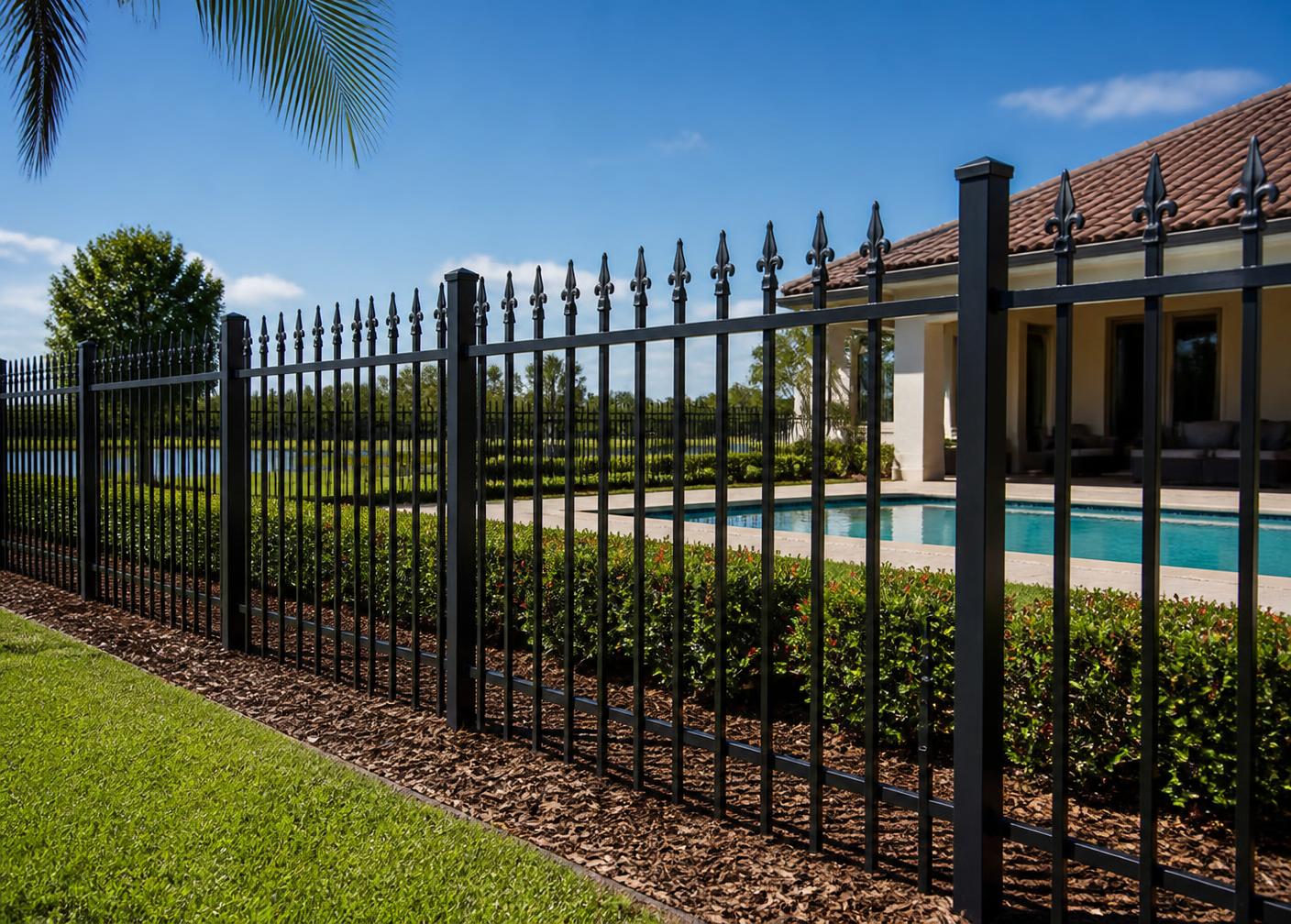
Florida pool barrier code, explained without the legalese
Height, spacing, climbable surfaces and gate hardware — what an inspector actually checks on a pool fence.
If you have a pool in Florida, the fence around it is not a design choice — it is a safety barrier with rules attached, and the inspector will check every one of them.
Height comes first. A residential pool barrier has a minimum height measured from the outside grade, and low spots along the run count against you. Sloped yards are where most homeowners fail without realizing it.
Picket spacing matters just as much. Gaps must be narrow enough that a small child cannot pass through, and the same applies to the gap under the bottom rail.
Climbable surfaces are the rule people forget. Horizontal rails, decorative scrollwork on the outside face, an air conditioner pad or a planter box next to the fence can all turn a compliant barrier into a ladder.
Gates are the strictest part. Pool gates must swing outward, close on their own from any open position, and latch on their own. The latch has to be positioned so a young child cannot reach it. Self-closing hinges and a self-latching magnetic latch are standard on every pool gate we hang.
Aluminum is the most common material for this because it is rust-free, pool-code friendly, and it keeps you able to see the water from the house — which is its own safety feature.
We install pool barriers to Florida requirements as a default, not an upgrade. Our customers in Belleview, Summerfield, Tavares and The Villages pass inspection on the first visit because the fence is built right the first time.
Thinking about a new fence?
Vinyl, wood, aluminum, chain link and farm fencing across Ocala and Marion County — free written estimates and a 5-year workmanship guarantee.
LIMITED-TIME OFFER: FREE GATE WITH YOUR NEW FENCE INSTALL