Should You Repair or Replace Your Fence?
When a section repair makes sense, when it is money wasted, and how to judge the posts rather than the panels.
A damaged fence can look worse than it is. A row of missing pickets or one crushed panel is obvious from across the yard, while failing posts can hide below an otherwise straight-looking run. The repair-or-replace decision starts with the posts, not the boards.
Test the posts first
Stand near each post and push the fence gently at about shoulder height. Watch the point where the post enters the ground. A sound post keeps the movement limited to normal flex in the rails or panel. A failing post rocks at the base, opens a gap in the soil or causes the entire section to lean together.
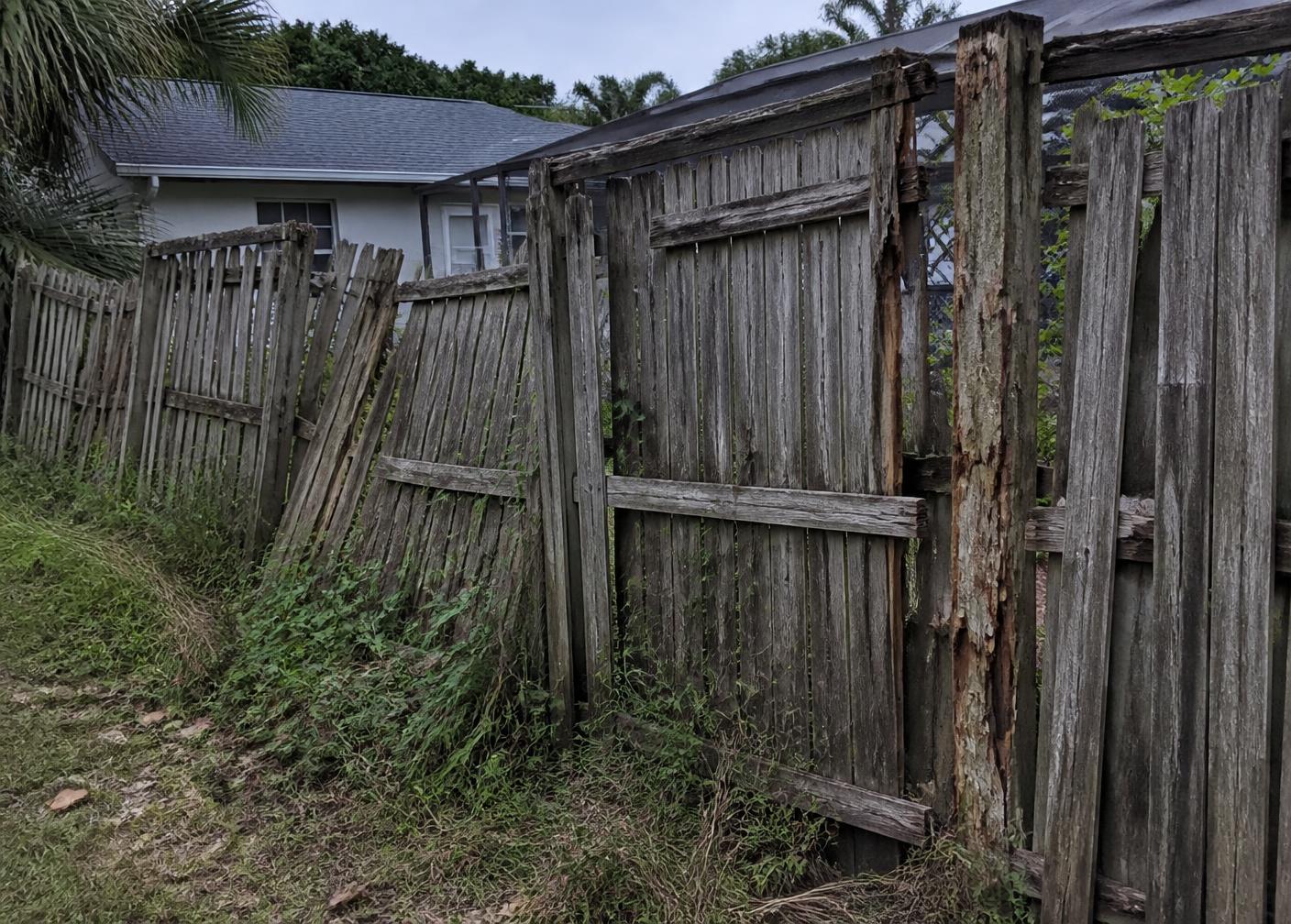
On wood, probe carefully near ground level for softness, splitting or decay. On metal, look for corrosion at the soil line. With vinyl, movement may come from the post or from a loose rail connection, so follow the motion instead of judging the surface alone.
Do not push a section that is near power lines, heavily storm-damaged or at risk of falling. Those conditions need a safe inspection before anything is moved.
When a small repair makes sense
A handful of damaged pickets, one loose rail, a worn latch or an isolated panel can often be repaired when the surrounding posts remain solid and plumb. Localized impact damage is a good example: a limb may break boards without weakening the rest of the line.
Gate repairs also make sense when the hinge post is sound. Adjusting hardware, replacing hinges or rebuilding the gate leaf can restore operation without touching the neighboring sections. If the post itself moves, hardware alone will not hold the correction.
Leaning sections tell a larger story
One leaning post can be replaced. Several leaning in the same direction usually point to a broader problem with depth, footing, drainage, decay or repeated wind load. Straightening the panels without correcting the posts only hides the issue until the next wet or windy stretch.
Walk the full perimeter rather than stopping at the visible damage. A fence often ages in groups because posts were installed at the same time and in the same conditions. Finding movement farther down the line changes whether a focused repair is a sensible investment.
Matching can decide the answer
Weathered wood changes color and texture. New replacement boards will look different at first, and the original picket profile may no longer be readily available. Stain can help unify a repair, but it cannot recreate every stage of natural weathering.
Vinyl colors and panel patterns also change as product lines are updated. A discontinued rail, routed post or tongue-and-groove profile can make an exact section replacement difficult. In that situation, a repair may be structurally possible but visually obvious. The homeowner has to decide whether that difference is acceptable.
Repeated repairs versus replacement
Repair is worthwhile when it restores a mostly sound system. It becomes poor value when each visit addresses another symptom of the same widespread post failure. Add up the sections already repaired, the ones beginning to move and the difficulty of matching materials. That full picture matters more than the cost of today's isolated fix.
A written comparison should explain what can be saved, what must be rebuilt and whether repaired sections can match. It should not pressure you into replacing sound fence or promise that a patch will solve a failing post line.
Storm damage and documentation
After a storm, photograph the full fence and each damaged point before cleanup. Insurers typically want to separate sudden storm damage from wear, decay or movement that existed beforehand. Clear photos of broken posts, fallen debris and intact neighboring sections help document that difference.
Secure hazards and temporary openings first, especially around pools or pets. Then inspect the posts across the whole run. If they remain solid, section repair may be the straightforward answer. If failure continues along the line, replacement may be the only way to stop paying for the same problem repeatedly.
Thinking about a new fence?
Vinyl, wood, aluminum, chain link and farm fencing across Ocala and Marion County — free written estimates and a 5-year workmanship guarantee.
LIMITED-TIME OFFER: FREE GATE WITH YOUR NEW FENCE INSTALL