Sandy Soil and Fence Posts: Why Setting Matters More Here
Sandy central Florida soil grips posts poorly when wet. How depth, footings, drainage and bracing keep a fence straight through storm season.
Post setting matters more in central Florida because sandy soil grips a post weakly, especially when it is soaked, and our fences face strong wind during storm season. A fence here is only as good as the depth, footing and drainage at the bottom of each post.
Boards, panels and color get most of the attention when people choose a fence. This guide covers the part you never see after installation day, and why it decides how long the rest stays straight.
How sand behaves around a post
Clay soils hold together. When you set a post in clay, the surrounding soil packs tight and resists sideways movement. Sand behaves differently. Its grains do not bind well, so when a post is pushed sideways, sand shifts around it rather than holding it firm.
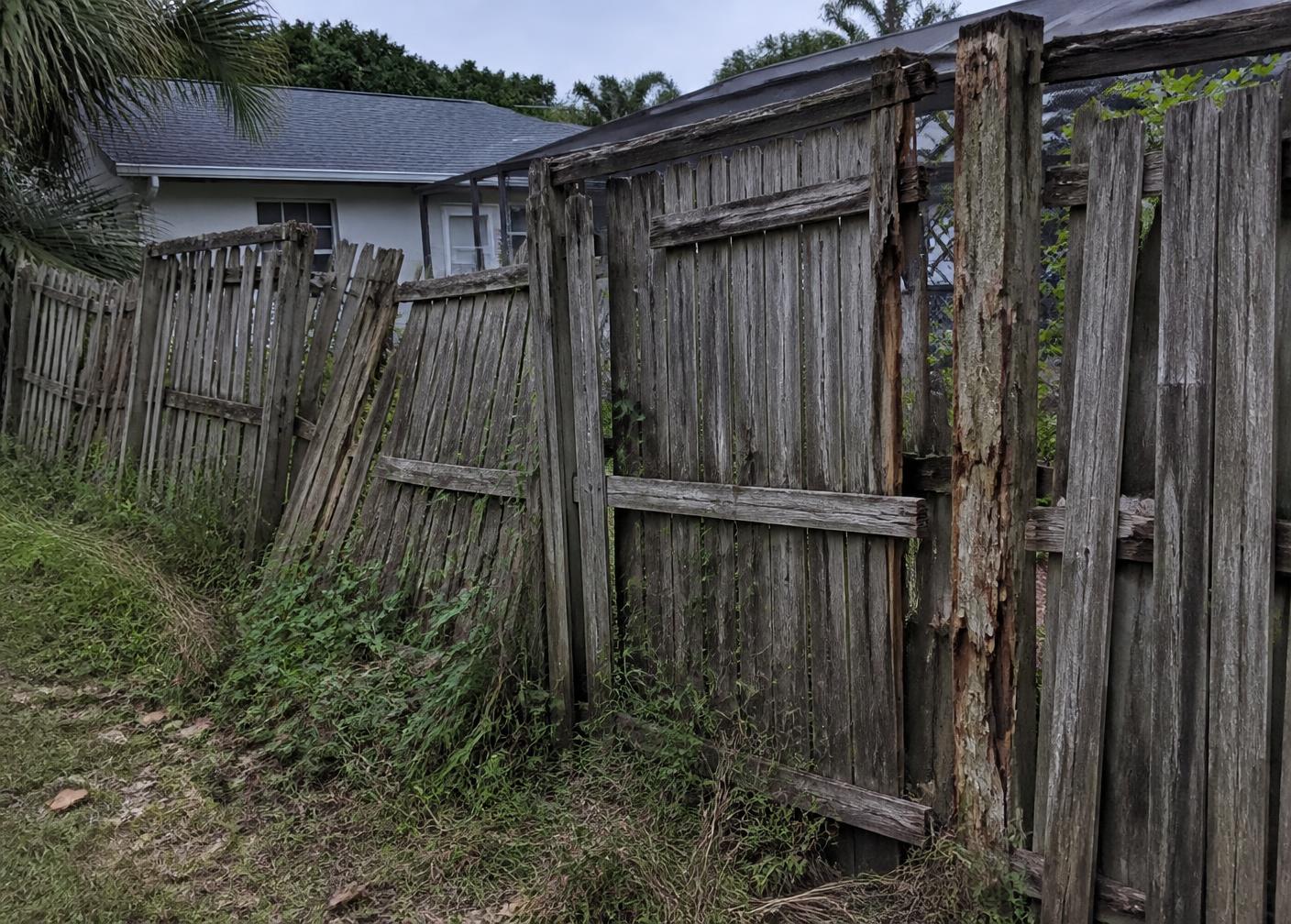
Dry sand drains quickly, which is good for wood posts. But during long wet spells the ground can become saturated, and saturated sand loses even more of its grip. That is often exactly when storms bring high wind. The result is a fence that looks fine for months and then leans after one bad week.
Soil varies across the area
Soil is not the same everywhere. Parts of Ocala have sandy loam over limestone. Around Dunnellon and Citrus Springs, rock can sit close to the surface. Wildwood and parts of Sumter County have deep sand in some areas and wetter ground in others. New subdivisions often sit on fill sand that settles over the first years.
A good crew adjusts to what it finds rather than setting every post the same way everywhere.
Depth is the first decision
A post resists leaning because of how much of it is below ground compared with above. The taller the fence and the more wind it catches, the more depth it needs. A six-foot solid privacy fence carries much more wind load than a low picket or chain link fence of the same length.
We will not give a single depth figure in an article, because the right depth depends on fence height, material, soil, post type and position. What you should know is that depth is not the place to save effort. Always ask any contractor how deep they set posts on your specific fence and why.
Footings: concrete or tamped fill
In sandy soil a concrete footing spreads the load over a wider area, giving the post more surface to push against. For most residential privacy fences, gates and corners here, full concrete footings are the common approach.
Tamped fill, where soil or gravel is compacted in layers around the post, can be appropriate for some farm fence and certain low-load applications, especially where drainage around a wood post matters. Neither method is right everywhere; the choice should match the fence and the ground.
Crown the top, keep water moving
Water sitting at the collar where a post enters the ground is the fastest way to rot wood and corrode metal. Finishing the top of a concrete footing so it slopes away from the post helps shed rain. On wood posts, ground-contact treated lumber matters for the same reason.
Look at where your downspouts and irrigation hit. A fence line under a roof drip edge or in the path of a sprinkler head stays wetter than the rest and deserves extra attention.
Corners, ends and gates work harder
Line posts share load along the run. Corner, end and gate posts do not have that help. A gate post carries the weight of the gate leaf pulling on it every time it opens, and a corner post takes tension from two directions.
These posts are typically set deeper, with larger footings, and in farm fencing with bracing. On driveway gates the hinge post may need to be heavier than the rest of the fence entirely. Sagging gates are one of the most common calls we get, and most trace back to a hinge post that was not set for the load.
Frost is not the issue, wind and water are
Northern building advice is built around frost, which can heave posts out of the ground. That is not a meaningful concern in central Florida. Our concerns are wind load, saturated ground and decay at the soil line. Advice written for colder climates can lead to the wrong choices here.
Hitting rock
When an auger hits limestone, the easy mistake is to stop and set the post short. That leaves a post that looks right but lacks the depth it needs. The better answer is to core into the rock or adjust the layout slightly. Ask your contractor what they do when they hit rock.
Settling on new lots
On new-construction lots, fill sand settles as it rains and dries over time. Compacting the base of each hole and setting to full depth helps the fence settle evenly with the yard rather than sagging between posts.
Signs your existing posts are struggling
Push each post at shoulder height. Movement at the base, a gap opening in the soil, soft wood near grade, or several posts leaning the same direction all point to a setting problem. Panels can be replaced; posts that were set wrong will keep failing until they are reset.
What drives cost here
Proper setting takes more concrete, more digging and more time than cutting corners, and rock or difficult access adds work. Those factors, along with length, height, material and gates, shape a fence quote. We do not list prices in articles because every property is different. Request a free estimate and ask us to explain how we will set posts on your ground.
Questions to ask any contractor
How deep will you set line, corner and gate posts on this fence? Will you use concrete, tamped fill or both, and why? What happens if you hit rock? How will you keep water off the post collar? Clear answers tell you a lot about the fence you will get.
We build across Ocala, Citrus Springs, Dunnellon, Wildwood and beyond. Request a free estimate and we will walk your line and explain exactly how we would set it.
Thinking about a new fence?
Vinyl, wood, aluminum, chain link and farm fencing across Ocala and Marion County — free written estimates and a 5-year workmanship guarantee.
LIMITED-TIME OFFER: FREE GATE WITH YOUR NEW FENCE INSTALL