Vinyl Versus Aluminium in Florida Sun and Salt Air
Vinyl gives privacy; aluminium keeps views open and suits pool areas. How each handles Florida sun, humidity and coastal air, and which fits your property.
Vinyl is usually the better choice when you want privacy, and aluminium is usually the better choice when you want an open view, a pool barrier or a style many HOAs prefer. Both handle Florida sun and humidity well when the product and installation are right; the decision is more about what you need the fence to do than which material survives.
This guide compares the two for central Florida homeowners, including what salt air means for properties inland and near the coast, maintenance, looks and the questions worth asking before you choose.
What each material is
Vinyl fencing is made from PVC formed into posts, rails and boards or panels. It comes in solid privacy styles, semi-privacy and picket designs, in white, tan, grey and woodgrain-look colors.
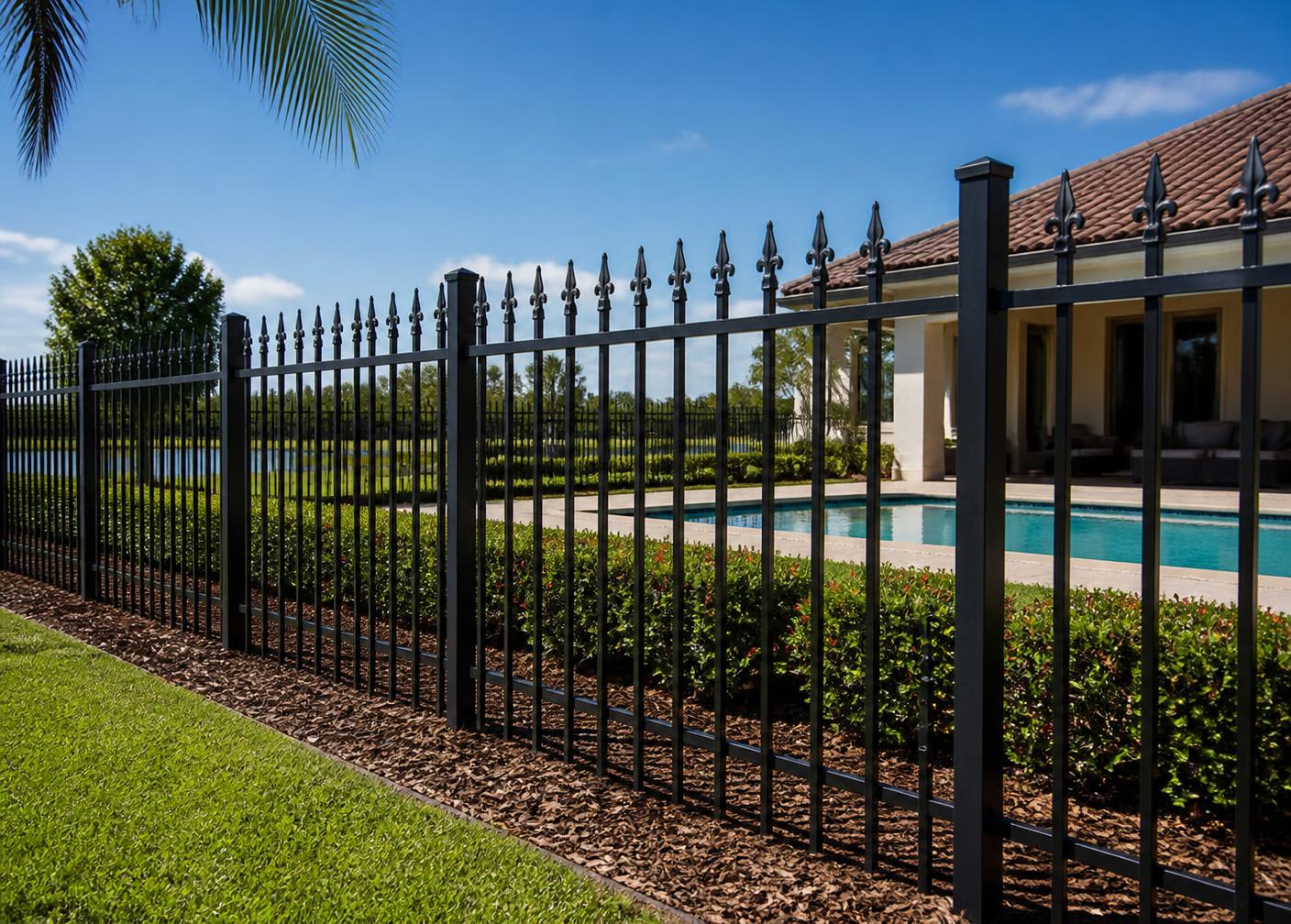
Aluminium fencing is made from extruded aluminium pickets, rails and posts with a powder-coated finish, most often black. It is an ornamental, see-through fence and cannot provide privacy on its own.
Sun and heat
Florida sun is hard on every exterior material. Good vinyl includes UV inhibitors to resist yellowing and brittleness. Quality varies between manufacturers, so the product matters. Darker vinyl colors absorb more heat, so ask how a darker color is designed to handle it.
Powder-coated aluminium holds its finish well in sun. Over a long time, any finish can fade slightly, but aluminium itself does not warp, rot or become brittle from heat.
Humidity and rain
Neither material rots, which is a big advantage over wood in our climate. Vinyl can grow mildew or green film in shady, damp spots, especially on the north side of a fence or under trees. It usually washes off with a mild cleaner and a soft brush.
Aluminium sheds water easily. Keep sprinkler heads from spraying the same spot constantly, since mineral-heavy irrigation water can leave marks on any fence.
Salt air: inland versus coastal
Ocala, The Villages, Leesburg and Belleview are inland, and salt exposure there is very different from a beachfront property. Still, many homeowners here also own or plan to own coastal property, and some ask whether salt air affects their choice.
Aluminium does not rust the way steel does, which is one reason it is popular near the coast. Scratches in the powder coat and the fasteners are where corrosion can start, so quality coating and hardware matter. Vinyl is not affected by salt in the same way, though hardware on gates still needs attention.
Close to the water, rinsing a fence with fresh water now and then helps either material. Inland, that is rarely necessary beyond normal cleaning.
Wind
A solid vinyl privacy fence catches the full force of the wind, acting like a sail. That load goes into the posts, so post setting and panel reinforcement matter a great deal. Semi-privacy styles with gaps let some wind through.
Aluminium lets wind pass between the pickets, so it carries much less load. That does not make it storm-proof, and falling limbs will bend it, but it is not fighting the wind like a solid panel. We do not publish wind ratings; ask about the specific product and how it will be installed.
Privacy, views and pools
If you need to block a view of a road or a neighbor's yard, vinyl is the natural choice. If you want to keep a view of a golf course, a lake or a garden, aluminium keeps it open while still marking the boundary and containing pets.
Around pools, aluminium is a common barrier choice because it keeps sight lines open and can be built to local barrier requirements with self-closing, self-latching gates. Vinyl pool fencing is also possible. Barrier rules vary, so any pool fence should be designed to the code that applies at your address.
HOA preferences
Many communities around The Villages, Summerfield and parts of Leesburg specify black aluminium, or limit where solid fencing can go. Check your written guidelines before you fall in love with a style. Our HOA approval guide covers what to sort first.
Maintenance
Vinyl: wash occasionally, especially shaded sections, and check gates and latches. Avoid pressure washing at high settings close to the surface.
Aluminium: rinse occasionally, touch up scratches in the coating, and keep gates adjusted. Check that nothing is leaning on the fence, such as plants or stored items.
Both: keep irrigation off the fence, trim vines and shrubs away, and check posts after storms.
Look and feel
Vinyl gives a clean, solid look and comes in several colors and styles, including woodgrain textures. Aluminium gives a lighter, more formal look and suits many Florida home styles. Our materials page lets you compare colors, rail profiles and post caps side by side.
What drives the price
We do not quote prices in articles. What drives the price of either material is the style, height, color, length of the run, number and size of gates, terrain and whether the fence needs to meet pool or HOA rules. Two fences that look similar can differ because of those details. Request a free estimate and we can price both materials for the same layout so you can compare.
Which should you choose?
Choose vinyl if privacy is the goal and your HOA allows it. Choose aluminium if you want views, a pool barrier or your community prefers it. Many properties use both: vinyl along the back property line and aluminium around the pool or front yard.
Request a free estimate in Ocala, The Villages, Leesburg, Belleview or nearby, and we will walk the property with you and help decide which fits each part of it.
Thinking about a new fence?
Vinyl, wood, aluminum, chain link and farm fencing across Ocala and Marion County — free written estimates and a 5-year workmanship guarantee.
LIMITED-TIME OFFER: FREE GATE WITH YOUR NEW FENCE INSTALL